Ferrara Fascist Punitive Expedition
M: Son of the CenturyThe Ferrara Fascist Punitive Expedition was a coordinated armed attack on peasant-league headquarters in the countryside around Ferrara on January 23, 1921. Planned on a military model and supported by the Agrarian Association, it targeted several communities at once. The expedition’s importance lay not only in its immediate destruction of league premises but in the method it displayed: organized transport, divided routes, local assistance and force used to contest socialist influence in the countryside.
Rural conflict and the expedition’s purpose
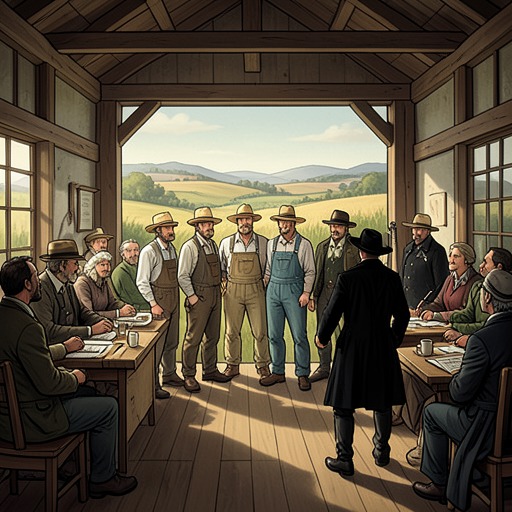
The operation emerged from an increasingly bitter struggle over work and authority in the Ferrara countryside. Socialist leagues had built a dense network across the rural areas, while conflict over hiring, wages and landowners’ obligations sharpened hostility between farmworkers and those who employed or managed them. In Ferrara, seasonal farmworkers and sharecroppers had forced landowners to accept a collective farm agreement, including wage increases, worker-managed recruitment and a required hiring quota. These arrangements made control of the labor market a central political stake.
The conflict was not confined to farms. In Bologna, revolutionary labor organizations and the threat of further workplace and housing demands left many employers and middle-class residents feeling besieged. In the countryside, leagues controlled hiring and other parts of economic life; a breach of their rules could bring fines, social exclusion or pressure to leave. For the landless workers, seasonal employment was precarious: the account notes that farmhands averaged only 120 days of work a year. This made disputes over recruitment and wages a matter of subsistence as well as political power.
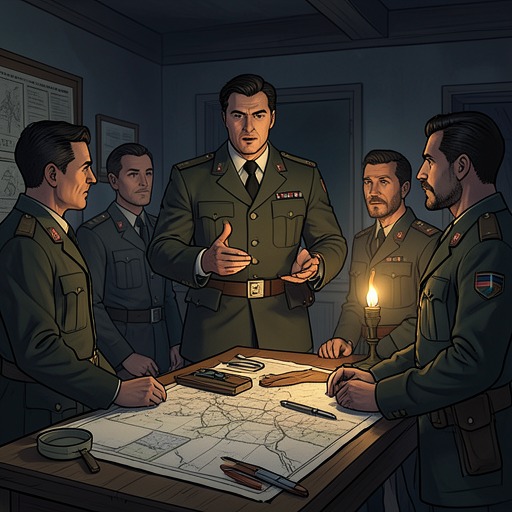
Against that background, the expedition was designed to strike several peasant leagues in a single operation. Its targets included San Martino, Aguscello, Cona, Fossanova San Biagio, Denore and Fossanova San Marco. The organizers expected resistance and therefore relied on surprise, premeditated force and sufficient numbers to strike different places simultaneously. Trucks supplied by the Agrarian Association gave the operation practical reach, linking the armed action to the interests and resources of local landowners.
Organization and participants
Dozens of armed men assembled for the expedition, but they did not represent a single social type. The force brought together a decorated Ardito, a professor drawn to legionary aesthetics and Barbato Gattelli, a landowner’s son and war veteran who had entered the automotive business. The range of backgrounds made the expedition a coalition in action: its members could differ in class, occupation and reasons for joining while taking part in the same armed campaign.
That coalition also contained dissenters. Olao Gaggioli, who had founded the Ferrara Fascio, was absent. He had resigned as its secretary in December in protest at Benito Mussolini’s break with Gabriele D’Annunzio and at the influence of agrarian interests. His brother Luigi had likewise objected to the organization’s direction, writing to the Milan central committee that the local Fascist group was financed by the Agrarian Association and becoming a guardian of the wealthy bourgeoisie. Their objections exposed a fault line within local Fascism: the expedition’s material dependence on agrarian support was also a source of political division.
Italo Balbo was among those who went. Stories questioning his motives and describing how he had entered the movement circulated around him, but as the trucks departed, the account places those rumors in the background. Balbo rode with Arturo Breviglieri and members of the Celibano squad in a surplus military vehicle. Whatever the men’s previous circumstances, the journey gathered them into an armed unit facing the same uncertainty and potential danger.
The attacks in the countryside
At the Stellata crossroads, the trucks split into groups, sending squads toward different communities. At Aguscello, local agrarians met and guided the Fascists through the village. The resistance was limited: a shot from a quail rifle did little against the attackers’ heavy clothing. The peasant league’s premises were entered, its windows broken and its furniture carried out and smashed in the square. Carabinieri arrested the socialists who had defended themselves with a shotgun.
The next major confrontation came at Denore. Giuseppe Gozzi, an agrarian, led the arriving men to the league headquarters, where socialists had gathered in greater numbers and prepared to defend the building. Balbo entered the clash carrying a mace associated with battlefield use. Fighting was intense, and a Fascist used a revolver, seriously wounding two defenders. Balbo, Breviglieri and Chiozzi also reported minor casualties. The encounter showed that the expedition was not simply a procession through undefended territory: in Denore, the leagues offered organized resistance, and the attack became a direct armed confrontation.
On the return journey, the force also damaged the headquarters of the unarmed league at San Biagio. The contrast between the fighting at Denore and the attack on an unarmed organization reveals the breadth of the operation: it struck not only armed opponents but also the institutions through which rural socialist organization operated. The sequence of simultaneous deployments and attacks extended the action beyond a single village or isolated clash.
Consequences and political significance
The account emphasizes how participation in violence altered the relation among the attackers. Before the expedition, they differed in background, status and political commitments; after fighting together and sustaining casualties, they were described as no longer divided into separate factions. Shared exposure and the act of killing became a form of cohesion. This was a political consequence as well as a personal one: armed action could bind a movement whose local members did not share identical interests.
The expedition also demonstrated how Fascist action could draw on a network of local resources and allies. The Agrarian Association provided trucks, local agrarians helped guide the squads, and the attacks were directed against the leagues that regulated rural labor. The operation therefore joined political organization to economic conflict. It offered landowners a means of challenging the leagues’ authority while allowing the Fascists to present themselves as an armed force capable of intervening where opponents held local power.
Seen against the wider conflict, the January attack anticipated later mass mobilizations and confrontations in which the countryside moved into the city and workers’ organizations answered Fascist violence with calls for a general strike. Those later episodes had different scales and circumstances, but the Ferrara expedition already displayed important elements of the escalating struggle: coordinated mobilization, organized armed units, rival claims to public authority and the use of force to weaken political opponents. Its defining change was from scattered antagonism to planned action across multiple rural targets.